Guides · Getting started · 5 min read
Quickstart: Osteoblast on the Always free plan.
A working agent on your own phone in 10 to 15 minutes. Then the good part: making it one your service can rely on.
Meet Osteoblast
Osteoblast is the Ostify builder: the place where you turn your own clinical content into an agent, an assistant that answers questions from that content. It is the part of Ostify on the Always free plan. Plans sets out exactly what is included.
Why the name? Osteoblasts are the cells that lay down new bone. This one lays down the first layer of your agent, and you keep building on it.
You can have a first version working in 10 to 15 minutes. An agent that is ready for the people you look after takes more: more content, more specific answers and more testing. This guide covers both.
Six steps to a first version
- Sign upCreate your free account.
- Describe your agentIts name, who it is for and what it helps with.
- Add one leafletOne you already hand out is enough to begin.
- Approve the passagesOstify splits your leaflet into passages (short sections). Approve the ones it may use.
- Set how it talksReading level, tone and any rule it must never break.
- Say helloTalk to it on the simulated phone, or scan the code and use your own.
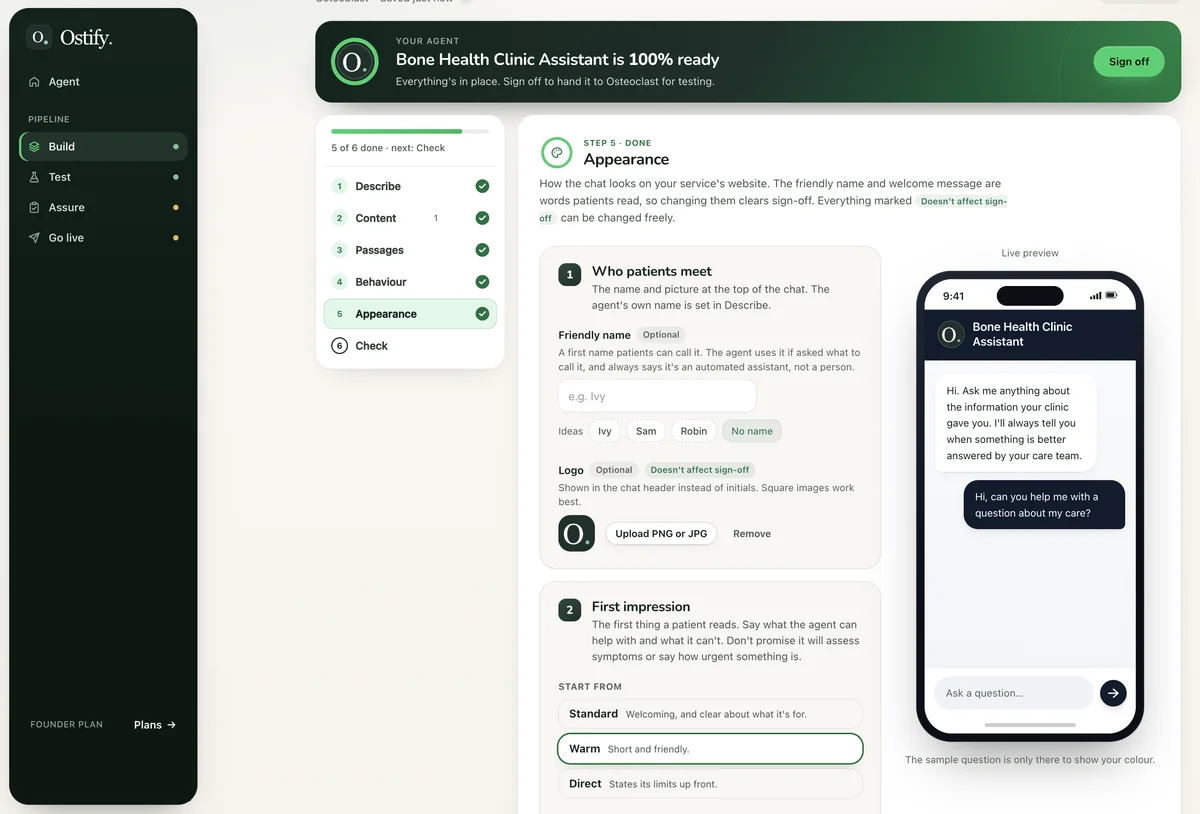
Your agent, on a phone, a few minutes after you started.
Brief it like a new colleague
The description is the first thing your agent reads, and it shapes every answer. Compare these two, written for an imaginary endoscopy unit.
“Answers questions about colonoscopy.”
It works, but the agent has to guess the rest.
- Who it is for
- Adults booked for a colonoscopy at our unit, and the relatives or carers helping them.
- What it helps with
- Getting ready, what happens on the day, and what to expect afterwards.
- What people usually ask
- When to stop eating, how to take the bowel preparation, whether they can drive home, how long they will be with us.
- Where it stops
- No results, no changing appointments, no advice on a person’s own medicines. For those, it gives the unit’s phone number.
Now its answers sound like your service.
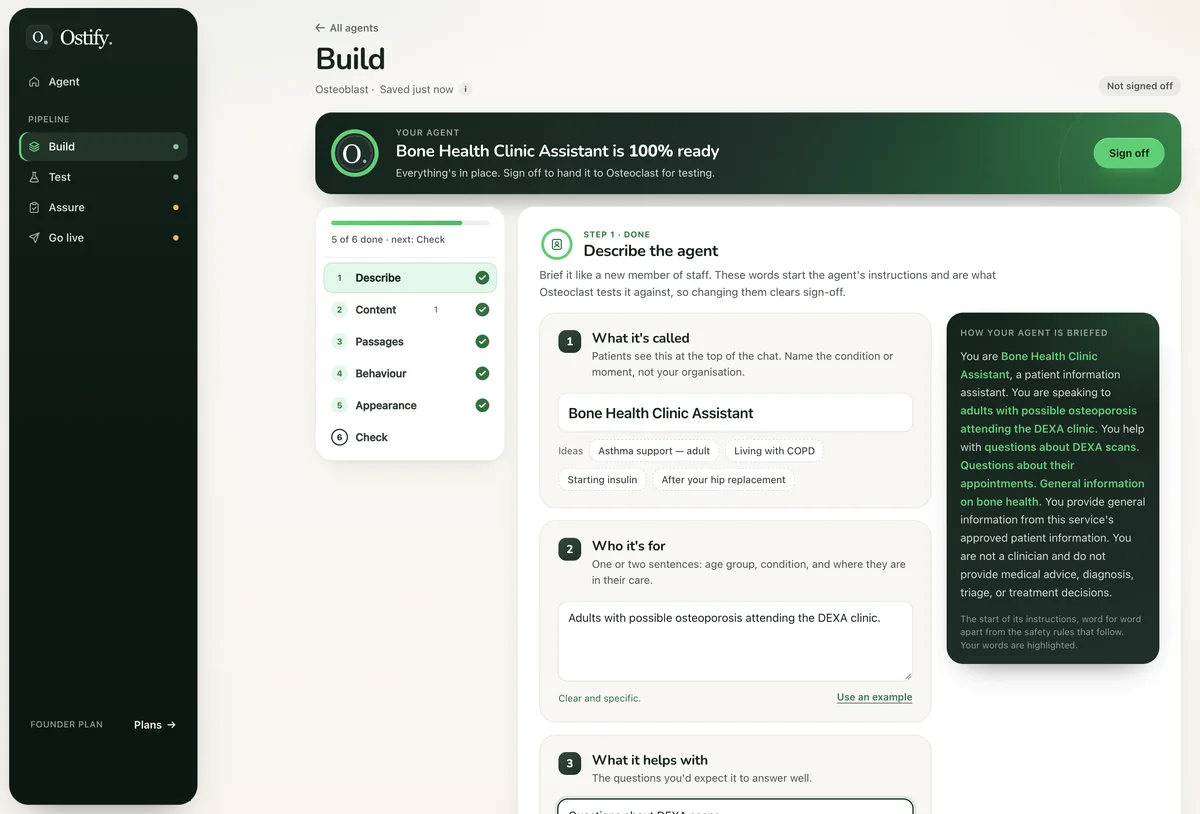
The Describe step. You can see exactly how your agent is briefed.
Feed it well
Your agent answers only from what you give it, so more good content means better answers.
- One leafletA working preview.
- The whole pathwayAnswers most of what people ask.
- Plus your own questions and answersSounds like your service.
Worth adding once your first leaflet is in:
- Every leaflet for the pathway: preparation, the day itself, aftercare and consent.
- The wording of your appointment letters and text reminders.
- Directions, parking, opening hours and who to phone.
- The questions your reception or booking team answer every day.
- Local policies that change the answer, such as who can come along or what to bring.
Each addition closes a gap where the agent would otherwise say it does not know. Preparing your content covers what to upload and what to leave out.
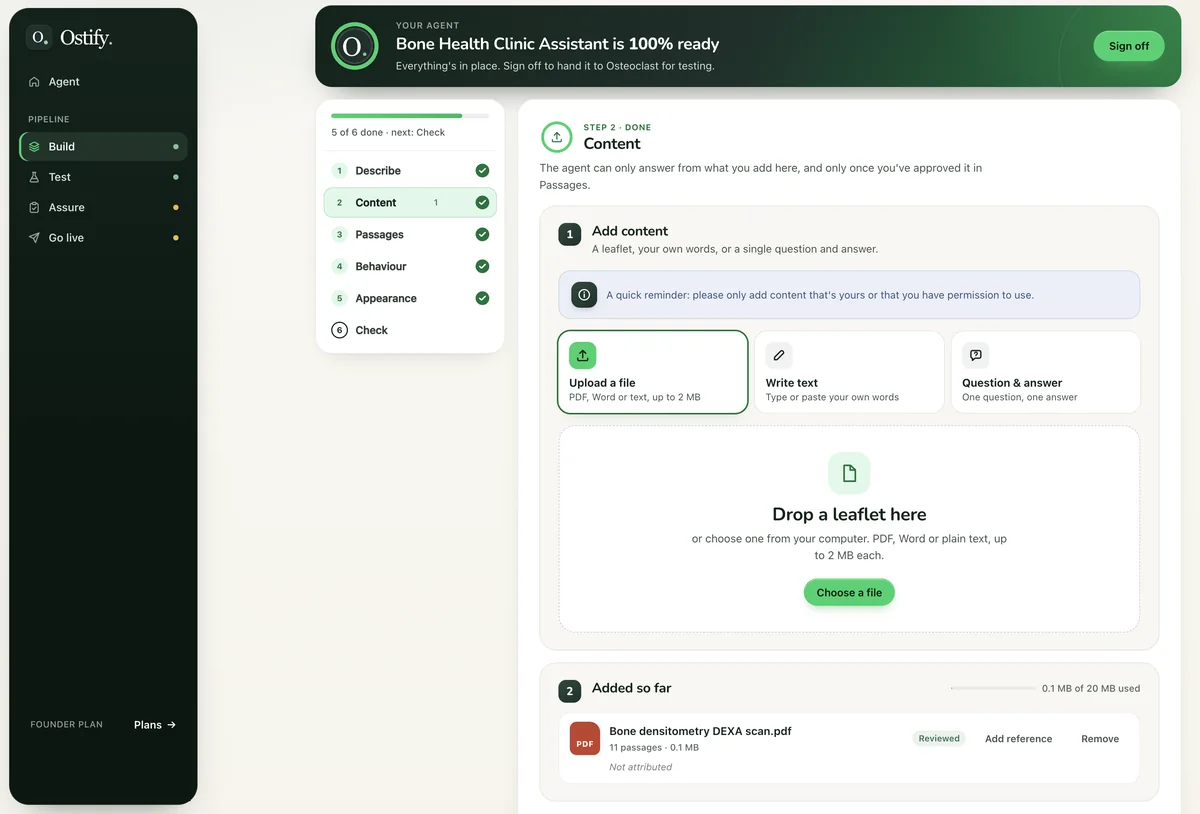
The Content step: upload files, write text, or add single questions and answers.
Teach it the small stuff
Leaflets rarely cover the small, practical questions, and those are the ones people ask most. A question-and-answer pair (one question with the exact answer you approve) covers each one precisely. Here is the level of detail to aim for. Yours should use your own service’s arrangements.
Where do I go when I arrive?
Come to the Endoscopy Unit on Level 2 and check in at reception. Please arrive 15 minutes before your appointment time.
Can someone come with me?
Yes. One person can wait with you before your procedure. They will be asked to stay in the waiting area while it takes place.
How long will I be there?
Plan to be with us for about three hours. This includes getting ready, the procedure and time to recover.
What should I bring?
Your appointment letter, a list of your medicines, and a dressing gown and slippers if you would like them.
What if I need to cancel?
Phone the booking team on the number at the top of your letter as soon as you can, so the appointment can go to someone else.
Ten or twenty pairs like these make a noticeable difference. Writing good question-and-answer pairs explains how to word them.
From first version to one you can rely on
The first version shows you what is possible. The work that follows is what makes an agent dependable enough for a clinical service:
- Widen the content until the common questions all have an answer.
- Read every passage and approve only wording you would stand behind.
- Write your limits as clear rules. See writing rules it must never break.
- Match the voice to the people it serves. See choosing a reading level and tone.
- Ask it the hard questions, the anxious ones and the ones just outside its job, and fix the content each time an answer falls short.
- Ask colleagues to try it. They will ask things you did not think of.
Expect to come back to it over several sittings. Each round makes it noticeably better.
Good to know
- The preview is for you. No patients are involved at this stage.
- Ostify’s own guardrails (built-in safety rules) are in place from the first message.
- You can stay on Always free for as long as you like, and keep improving your agent.
Where next
For each build step in more depth, read building your first agent. When your agent sounds like your service, evaluation is the next stage.